






How it works
The problem with disconnected content production
Content teams often repeat the same work across topic discovery, performance review, research, briefs, drafts, SEO checks, images, metadata, and CMS entry. Useful signals live across analytics, search tools, editorial calendars, documents, communication tools, previous campaigns, websites, and internal knowledge.
A text generator alone does not connect those signals, preserve evidence, apply the correct editorial policy, or produce a complete package ready for a real publishing workflow.
The result is a disconnected process: topic choices are separated from performance evidence, first drafts still need extensive review, and teams repeat formatting and CMS work after the writing is done.
How Content Creation Workflow solves it
Blazity turns the selected editorial process into a controlled workflow built around your current tools. Together, we define the discovery inputs, allowed sources, voice, structure, SEO rules, content policy, review gates, asset process, performance feedback, and publishing fields required for the chosen use case.
The workflow can analyze selected article-performance, search, content-gap, feed, or editorial-backlog signals to suggest topics and improvements. It then researches the approved topic, stores claim-to-source evidence, proposes a brief and outline, generates the draft, and runs the configured evidence, citation, style, structure, SEO, and internal-link audits. Claims that lack required evidence are flagged or blocked and routed to an editor; the audits do not guarantee factual correctness.
After article approval and explicit asset selection or licensing where required, the workflow prepares the article body, titles, descriptions, tags, categories, author data, internal links, and assets as a complete draft in the selected CMS. Publication remains an editorial decision.
Reference architecture
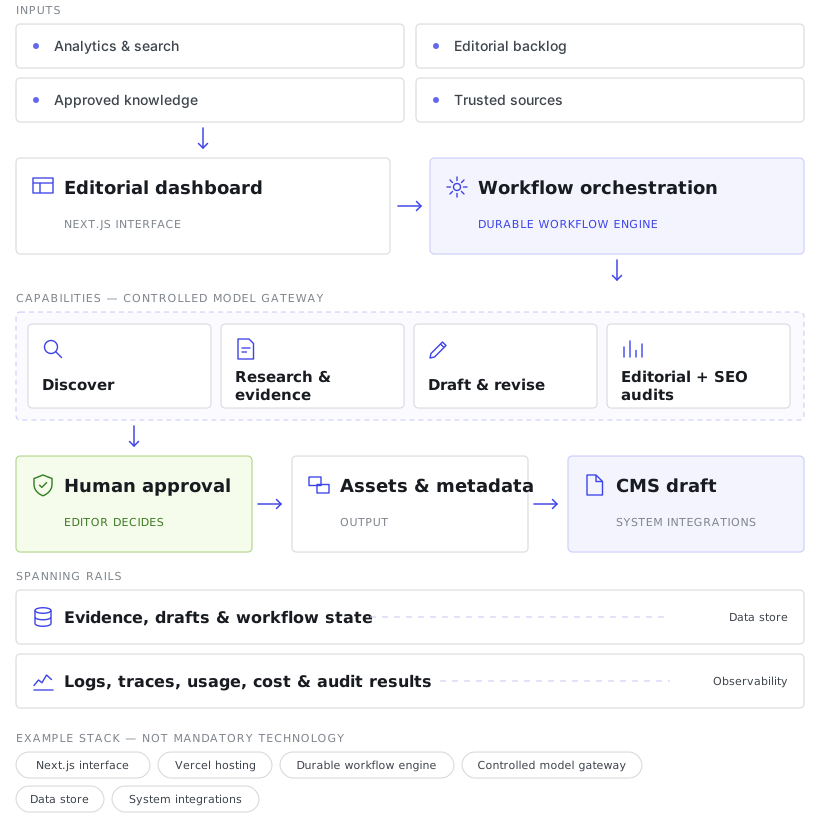
One example deployment for an evidence-backed content workflow. It can be adapted to your preferred cloud and integration environment.
Get started
Step 1: Map discovery, creation, and publishing
We map how your team finds opportunities, selects topics, researches, writes, reviews, sources assets, performs SEO checks, enters content into the CMS, publishes, and evaluates article performance.
Step 2: Design and build the custom workflow
Blazity connects the selected systems and implements discovery inputs, editorial profiles, research and drafting stages, evidence rules, SEO audits, approval gates, metadata mapping, asset handling, CMS handoff, and the feedback signals required for the chosen scope.
Step 3: Pilot, review, and improve
We run representative topics through the complete workflow, compare generated drafts with editor-approved versions, verify the CMS package, and measure time, corrections, audit failures, cost, and editorial acceptance. The workflow expands only after the pilot is reliable.
How it can work for a media company
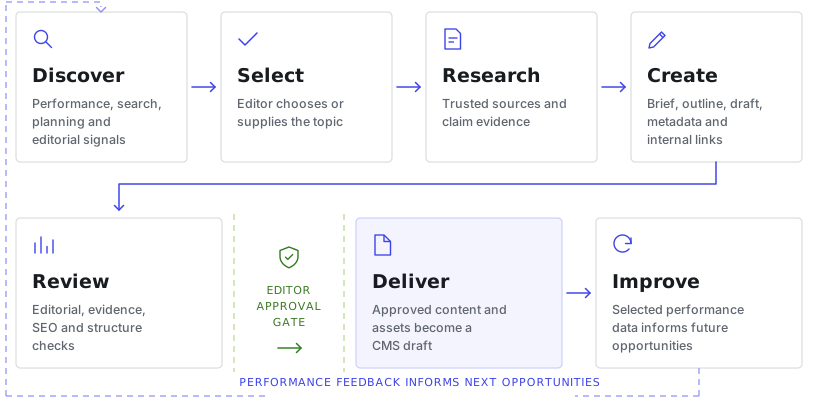
From content opportunity to an editor-controlled CMS draft, with performance feedback informing what comes next. Editors retain publication control.
Common extensions
- Discovery from analytics, search, trend, feed, competitor, and editorial-planning signals
- Article-performance analysis with topic, refresh, structure, and internal-link suggestions
- Additional CMS, knowledge, research, communication, planning, and licensed-asset integrations
- Multi-author, multi-brand, multi-portal, multilingual, and market-specific editorial profiles
- Approval-gated adaptations for social, email, campaign, and sales channels
- Enterprise permissions, audit policies, cost controls, workflow metrics, and custom integration adapters
Outcome
Content Creation Workflow gives organizations a tailored production system connecting discovery, evidence-backed creation, editorial review, and publishing operations.
Discovery, performance signals, research, drafting, SEO audits, review, metadata, assets, and CMS handoff become one visible process. Editors can see why a topic was suggested, where claims came from, which checks passed, what changed, and what still requires judgment.
The workflow reduces repetitive content operations while adapting to the tools and rules the team already uses. It preserves the two things that matter most: trusted evidence and human editorial ownership.
%201.svg)